




Dubai has long been known as the gateway of trade between East and West. From luxury fashion houses setting up regional offices to wholesale suppliers shipping fabrics worldwide, the city is fast emerging as a center for garment and textile manufacturing in the Middle East.
For entrepreneurs, investors, and industrialists, this growth brings an opportunity: securing a garment & textile manufacturing license in Dubai.
But what exactly is it? How do you apply? Which free zones or mainland options are best? What costs and requirements should you expect?
This complete guide from Vista Corporate Group answers all of that, so you can transform your business idea into a profitable textile or apparel production facility in Dubai.
1. Why Dubai for Garment & Textile Manufacturing?
Before diving into the garment licensing in Dubai process, let’s explore why this location is becoming so attractive for textile entrepreneurs:
- Strategic Location – Dubai sits at the crossroads of Europe, Asia, and Africa, giving garment manufacturers direct access to over 2 billion consumers.
- Strong Logistics – Ports like Jebel Ali and airports like Al Maktoum & Dubai International make imports of raw materials and exports of finished goods seamless.
- Growing Market – The UAE’s textile industry is worth billions annually, with demand from both luxury and mass-market fashion.
- Business-Friendly Ecosystem – Dubai offers free zones, mainland setups, and industrial zones with tax-friendly regimes and investor-friendly policies.
- Skilled Workforce – With access to talent from South Asia, Africa, and the Middle East, Dubai attracts garment workers, designers, and production managers.
Simply put: Dubai is no longer just a trading hub. It is becoming a manufacturing powerhouse.
What Is a Dubai Garment Manufacturing License?
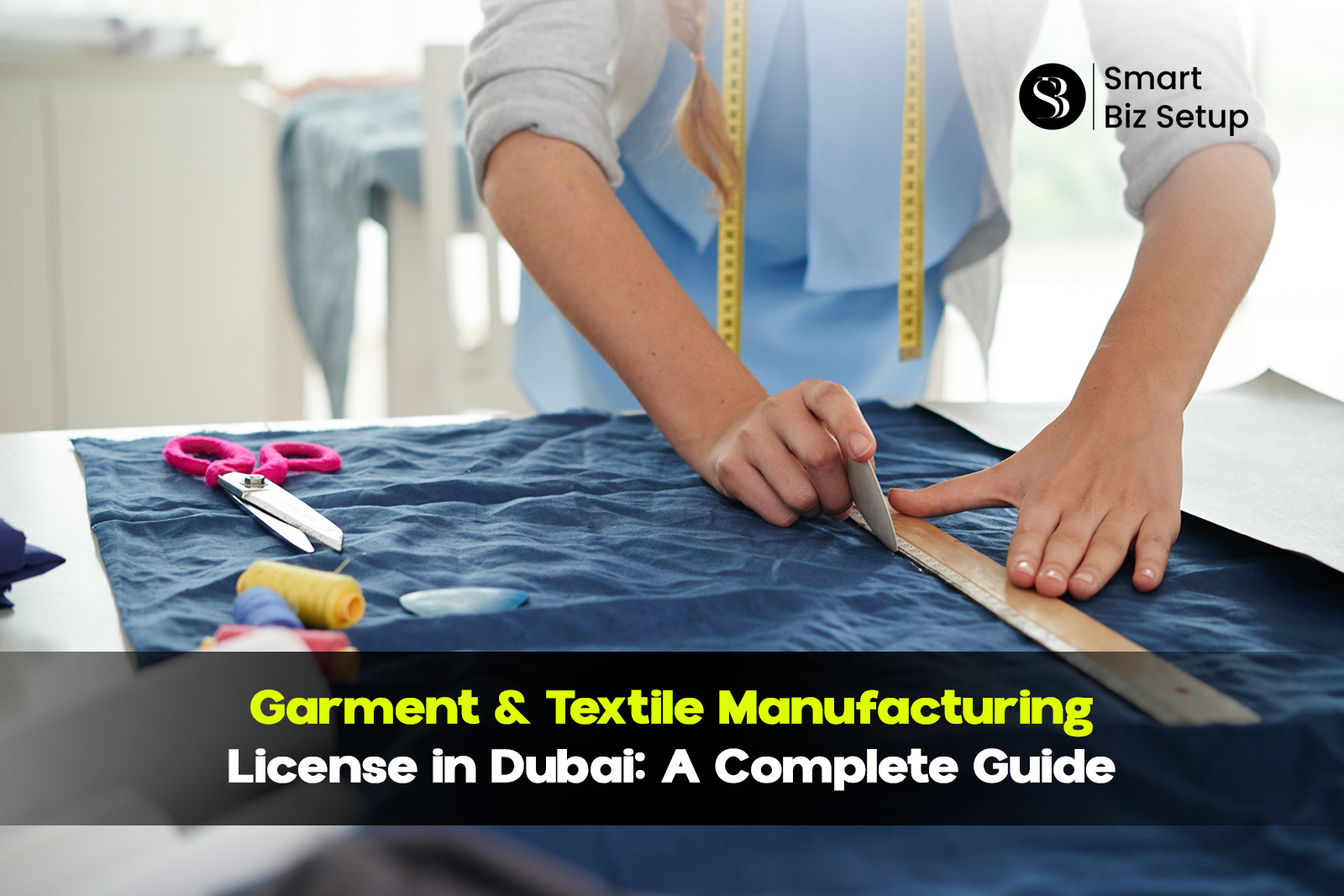
A Dubai garment manufacturing license (sometimes called a textile factory license in Dubai) is an industrial permit that allows companies to produce, cut, stitch, dye, print, and package garments and textiles within the UAE.
This license is mandatory for:
- Running a garment factory in Dubai.
- Setting up a clothing production line (ready-made garments, uniforms, sportswear, etc.).
- Manufacturing textiles and fabrics (weaving, knitting, dyeing).
- Exporting or supplying garments to wholesalers, retailers, or international buyers.
It falls under the industrial license category issued by Dubai’s Department of Economy & Tourism (DET) for the mainland, or by various free zones if you want to set up in a specialised cluster.
Types of Garment & Textile Licenses in Dubai
There isn’t just one “garment license.” Depending on your business model, you can choose between:
a) Garment Factory License Dubai
For large-scale production — uniforms, corporate wear, mass production lines.
b) Apparel Production License Dubai
For fashion labels, boutiques, and designers producing collections locally.
c) Textile Manufacturing License UAE
For weaving, dyeing, and processing fabrics (industrial-level).
d) Free Zone Textile License Dubai
For companies focusing on export and international trade (100% foreign ownership, tax-free benefits).
e) Dubai Industrial Textile Permit
Required if you plan to use heavy machinery or chemical-based processes.
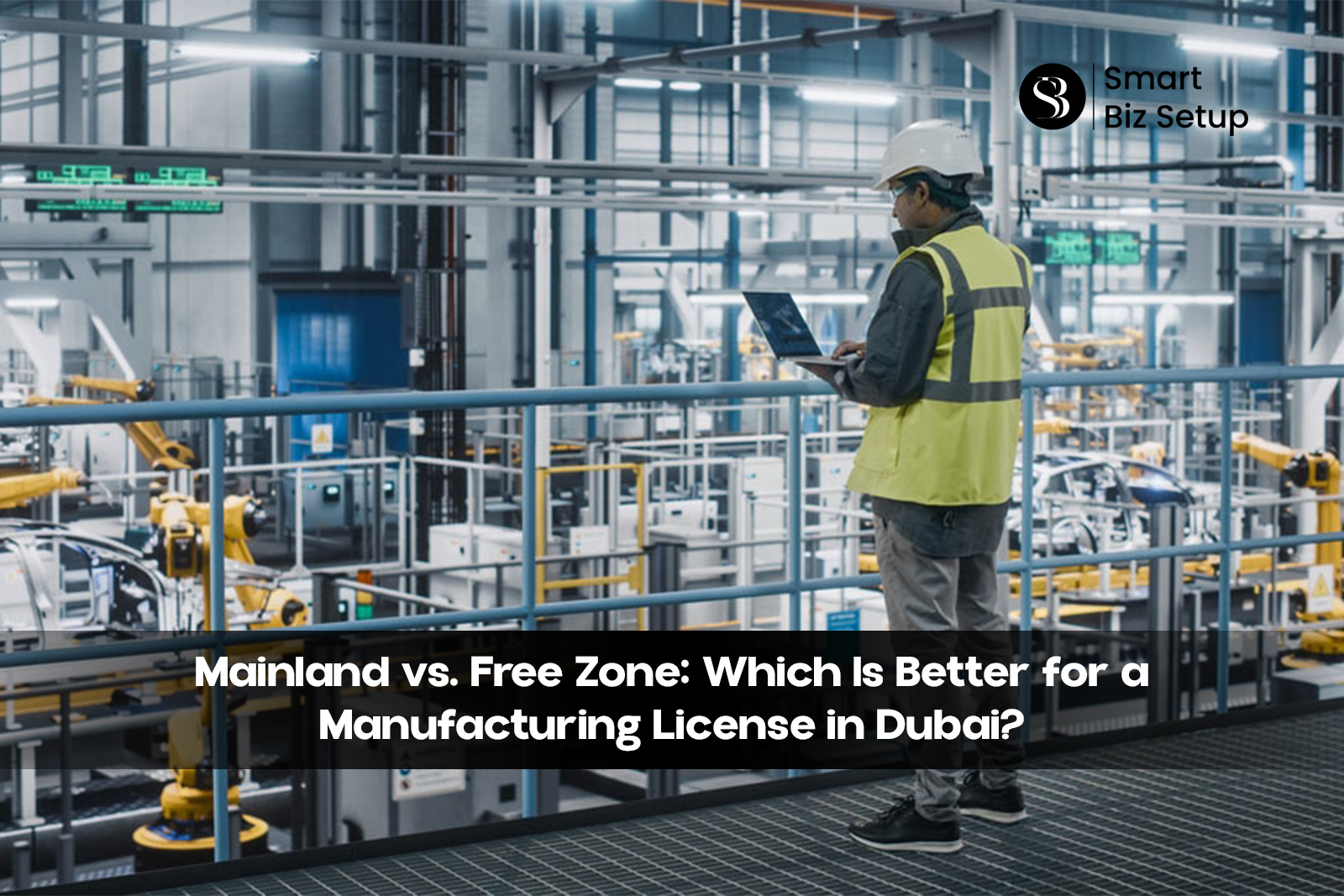
Mainland vs Free Zone Textile License Dubai
Choosing between a mainland garment business license and a Dubai free zone textile license depends on your goals.
| Feature | Mainland (DET) | Free Zone |
| Ownership | 100% foreign ownership allowed (since 2021 reforms) | 100% foreign ownership |
| Market Access | Can sell directly in UAE & GCC | Primarily export; UAE sales require distributor |
| Scale | Suitable for factories & large production | Great for startups & exporters |
| Location | Industrial zones like Al Quoz, Jebel Ali, DIP | Free zones like JAFZA, RAKEZ, Dubai Industrial City |
Tip: If you’re planning large-scale clothing production in Dubai, the mainland is often better. For export-focused textile manufacturing, free zones are ideal.
Step-by-Step: How to Get a Garment License in Dubai
Here’s a simplified roadmap:
- Define Your Activity
Decide if you’re focusing on garment stitching, textile production, or fashion collections. - Choose Location
Mainland (via DET) or Free Zone (JAFZA, DIC, RAKEZ). - Trade Name Registration
Pick a business name approved by the authorities. - Submit Application
Apply through DET (mainland) or free zone authority. - Prepare Documents
- Passport copies of shareholders
- Business plan
- Lease agreement for factory/office
- NOC (if applicable)
- Passport copies of shareholders
- Obtain Initial Approval
Get pre-approval from DET or free zone. - Lease Premises
Secure factory space in an industrial area. - Final License Issuance
Pay fees and receive your Dubai garment manufacturing license.
Documents Required for Textile Factory License Dubai
- Passport & visa copies of owners/shareholders
- Trade name reservation certificate
- Business plan (with manufacturing details)
- Tenancy contract (Ejari for mainland)
- Initial approval certificate
- Power of attorney (if representative is applying)
- NOC from sponsors (if required)
Business Setup for Textile Factory in Dubai
Setting up a textile factory license in Dubai requires:
- Industrial land/facility lease.
- Compliance with safety and labor laws.
- Import permits for raw materials (cotton, fabric, dyes).
- Environmental clearance if using chemicals/dyes.
Many entrepreneurs choose Dubai Industrial City or JAFZA for setting up factories due to large-scale industrial infrastructure.
Benefits of a Garment License in Dubai
Why should you go through the effort of setting up a textile factory in Dubai?
- Global Access – Export easily to Europe, GCC, Asia, Africa.
- Tax-Friendly – 0% personal income tax, competitive corporate tax regime.
- Huge Demand – Apparel & textiles are among the UAE’s largest non-oil industries.
- Modern Infrastructure – Warehouses, ports, and logistics networks tailored for manufacturing.
- Partnerships – Opportunities with global fashion brands entering the region.
Requirements for Textile License in Dubai
- Factory Premises: Must meet Dubai Municipality standards.
- Machinery & Equipment: Installed as per declared activity.
- Manpower: Adequate workforce with labor contracts.
- Environmental Approval: For dyeing/chemical-intensive units.
- Insurance & Safety Compliance: Mandatory for all manufacturing units.
Failure to comply can delay or suspend your license.
Best Free Zones for Textile & Garment Manufacturing
- Dubai Industrial City (DIC) – Ideal for factories, large-scale apparel units.
- JAFZA (Jebel Ali Free Zone) – Best for export-focused garment trading & production.
- RAKEZ (Ras Al Khaimah Economic Zone) – Cost-effective with industrial plots.
- Sharjah Airport Free Zone (SAIF) – Close to Sharjah’s textile markets.
- Dubai South Free Zone – Near Al Maktoum Airport, perfect for exports.
The Future of Textile Manufacturing in UAE
The UAE government is investing in:
- Sustainability – Eco-friendly fabrics, circular fashion initiatives.
- Smart Manufacturing – Automation, AI, and robotics in production lines.
- Export Growth – Expanding trade agreements with Europe and Asia.
This makes garment licensing in Dubai a forward-looking investment with long-term scalability.
Building Your Garment Business in Dubai
The garment & textile manufacturing license in Dubai opens the door to one of the most resilient and globally connected industries.
With:
- A booming market,
- Strong government support,
- Logistics powerhouses like Jebel Ali and Al Maktoum Airport,
- And access to billions of consumers…
Dubai is uniquely positioned to help your garment business succeed.
At Vista Corporate Group, we’ve guided countless entrepreneurs in setting up factories, securing licenses, and scaling their apparel production businesses.
If you’re ready to stitch your success story in Dubai’s textile industry, now is the time.
Contact Vista Corporate Group today and let’s make your garment business vision a reality.
FAQs
1. What is a Dubai garment manufacturing license?
It’s an industrial permit that allows production of garments and textiles in Dubai.
2. How to get a garment license in Dubai?
Apply via DET (mainland) or free zones, submit documents, lease premises, and complete approvals.
3. What’s the cost of a textile factory license in Dubai?
Ranges from AED 15,000–25,000 for the license, plus facility rent and equipment.
4. Can foreigners own a garment factory in Dubai?
Yes. Both mainland and free zones allow 100% foreign ownership.
5. Which free zones are best for garment businesses?
DIC, JAFZA, RAKEZ, SAIF, and Dubai South are leading options.
6. What are the requirements for a textile license?
Factory premises, machinery, workforce, safety approvals, and environmental clearance (if applicable).
7. Is Dubai a good place for apparel production?
Yes, strong demand, global connectivity, and a supportive ecosystem make it ideal.
8. Can I produce and export under the same license?
Yes. Industrial licenses cover both production and exports.
9. Is environmental approval mandatory?
Only if using chemicals/dyes that affect the environment.
10. Why choose Vista Corporate Group?
Because we simplify setup, ensure compliance, and connect you to the right industrial zones and opportunities.